

High-fidelity data capture and cabin ergonomics define the 2026 driving standard, yet factory-installed systems often lack the granular control required for professional-grade safety and comfort. Standard vehicle configurations frequently fail to address specific requirements for multi-channel recording or optimized interior lighting. Selecting reliable car tech accessories is complicated by vague technical specifications and component compatibility concerns. This guide provides a technical evaluation of modern vehicle hardware to help you optimize safety, cabin environment, and travel utility.
We analyze high-resolution 4K recording systems, ergonomic interior upgrades, and essential travel components designed for high-speed deployment and measurable performance. You'll find detailed specifications for the Guardian 3-Channel 4K Dash Cam alongside evaluations of LED lighting and climate control hardware. This analysis ensures you can select components that offer precise fitment and stable electronic performance for long-distance travel. We prioritize functional utility and technical transparency to streamline your vehicle upgrade process.
Key Takeaways
- Identify essential hardware specifications for 4K data capture, focusing on high-speed SD card compatibility and multi-channel configurations like the Guardian 3-Channel 4K Dash Cam.
- Enhance cabin visibility and environmental control through 12V and USB-powered LED lighting systems and integrated aromatherapy hardware.
- Maximize travel utility by evaluating car mattresses based on material composition, including PVC and flocked fabric durability ratings for long-distance use.
- Streamline the selection of car tech accessories by verifying power interface requirements across 12V, USB-A, and USB-C standards for tool-free installation.
- Transition from aesthetic modifications to functional safety upgrades to align older vehicle models with 2026 technical and driver utility standards.
The Evolution of In-Vehicle Technology and Driver Utility
Modern vehicle operation requires integrated data logging and environmental control systems. Aftermarket car tech accessories allow drivers to bridge the technical gap between older chassis designs and 2026 safety benchmarks. This shift involves moving beyond simple aesthetic modifications toward high-performance vehicle safety technology that prioritizes situational awareness. High-resolution multi-channel camera arrays provide verifiable evidence for insurance adjudication, replacing low-fidelity factory sensors that often lack timestamp accuracy and wide-angle coverage. Functional safety hardware provides verifiable data streams for liability protection, ensuring drivers possess objective evidence during incident reporting.
Power management is a critical technical requirement for multi-device configurations. Standard 12V DC sockets and USB-A or USB-C interfaces must support concurrent loads from dash cams, lighting arrays, and mobile hardware. Assess your power output. Utilizing a Power Strip with 6 AC Outlets & 6 USB Ports ensures stable voltage for sensitive electronics. Assessing total amperage draw prevents circuit overload and maintains hardware longevity. It's essential to verify that your vehicle's alternator and battery capacity can sustain the combined wattage of all active components during idle and transit.
Identifying Gaps in Factory Vehicle Technology
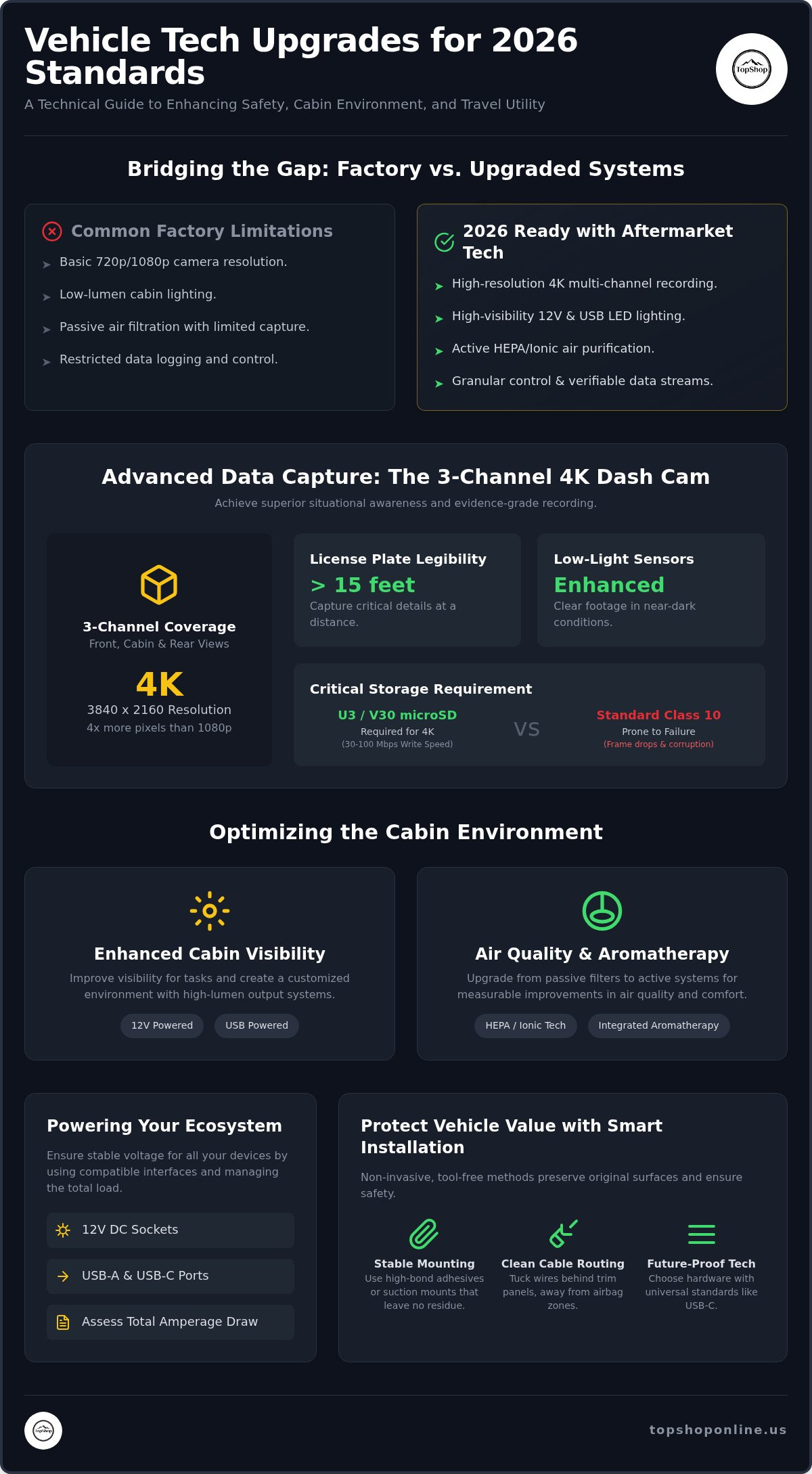
Factory-installed infotainment and monitoring systems often utilize legacy sensors with restricted resolution. While many stock systems offer basic 720p or 1080p rear-view monitoring, aftermarket car tech accessories like the Guardian 3-Channel 4K Dash Cam provide superior pixel density and license plate legibility. Built-in cabin lighting frequently lacks the lumen output needed for high-visibility tasks or detailed interior inspections. Portable tech upgrades increase vehicle versatility for extended road trips by providing customizable environmental parameters that factory hardware cannot match. Standard cabin air filtration often relies on passive filters with limited particulate capture rates, whereas active aftermarket units offer measurable improvements in air quality through HEPA or ionic technology.
The Impact of Accessories on Vehicle Resale and Utility
Non-invasive hardware upgrades maintain vehicle value by preserving the integrity of original interior surfaces. Tool-free installation methods for cameras and lighting prevent permanent modifications to the dashboard or headliner. Data recorded via high-fidelity dash cams streamlines insurance claim efficiency by providing clear telemetry and visual documentation. Selecting accessories that align with existing dashboard ergonomics ensures that added screens or controls don't obstruct the driver's line of sight. Key considerations for utility preservation include:
- Mounting Stability: Use of high-bond adhesives or suction interfaces that leave no residue.
- Cable Management: Routing wires behind trim panels to prevent interference with airbag deployment zones.
- Interface Compatibility: Ensuring hardware uses universal standards like USB-C to prevent future obsolescence.
Proper integration of these components transforms a standard cabin into a data-driven environment. Drivers gain better control over their travel utility without the high cost of a new vehicle purchase. It's a practical approach to modernizing transportation assets while prioritizing safety and ergonomics.
Advanced Dash Cam Specifications: Resolution, Channels, and Recording
4K resolution (3840 x 2160 pixels) provides four times the pixel density of standard 1080p (1920 x 1080). This density is critical for license plate legibility at distances exceeding 15 feet. High-speed car tech accessories must support these data streams using U3 or V30 rated microSD cards. These cards handle the 30 to 100 Mbps write speeds required for 4K video without frame drops or file corruption. Standard Class 10 cards often fail under the thermal and data loads of ultra-high-definition recording.
Low-light sensors utilize back-illuminated pixel technology to increase light sensitivity in near-dark conditions. This differs from infrared (IR) technology, which uses dedicated light emitters to illuminate the cabin interior. While IR is effective for short-range interior monitoring, high-sensitivity sensors are preferred for external road coverage. These systems integrate with automated driving systems by providing consistent visual data in variable lighting environments. Objective data capture remains the primary function of these optical sensors during nighttime transit.
Loop recording ensures continuous operation by overwriting the oldest unprotected files. Integrated G-sensors detect sudden kinetic shifts, such as collisions or hard braking, and automatically lock the current recording segment. This prevents the system from overwriting critical incident data. Most professional-grade units allow for adjustable G-sensor sensitivity to prevent false triggers from potholes or speed bumps.
Multi-Channel Recording: Front, Rear, and Interior Coverage
A 3-channel configuration provides total vehicle perimeter and interior monitoring. The front lens captures road incidents, the rear lens documents tailgating or rear-end impacts, and the interior lens records cabin activity. This setup is essential for rideshare operators and family safety. Synchronized data across all three lenses allows for a comprehensive 360-degree incident report with unified timestamps. High-fidelity audio recording often accompanies the interior channel to provide a complete record of cabin interactions.
Hardware Requirements for Continuous Monitoring
Continuous monitoring requires stable mounting and power management. Adhesive mounts using 3M VHB tape offer superior heat resistance and vibration dampening compared to standard suction cups. For 24-hour surveillance, parking mode functionality detects motion or impact while the vehicle is stationary. To prevent battery drain, these systems often require a hardwire kit with a voltage cutoff. Selecting a high-specification unit like the Guardian 3-Channel 4K Dash Cam ensures all hardware components meet these professional requirements. You can browse high-performance vehicle monitoring hardware to find compatible power solutions for your specific model.
Installation complexity varies by vehicle type. Plug-and-play options utilize 12V sockets for immediate deployment, while permanent installations tap into the fuse box for a cleaner aesthetic. Both methods must account for cable routing to avoid interfering with side-curtain airbags or other safety systems.
Optimizing Cabin Environment with LED Lighting and Aromatherapy
Cabin environmental parameters directly influence driver physiological states and operational efficiency. Integrated car tech accessories allow for precise calibration of interior illumination and atmospheric composition. Modern systems move beyond simple decorative functions to provide functional visibility and air quality management. Technical integration requires an understanding of voltage requirements and diffusion mechanics to ensure hardware longevity and system stability within the vehicle's electrical architecture. Proper environmental optimization reduces cognitive load and physical fatigue during extended transit periods.
LED Interior Lighting: Voltage and Control
High-efficiency SMD LED arrays provide superior lumen output compared to traditional incandescent bulbs. Most aftermarket kits operate on 12V DC circuits or 5V USB interfaces. 12V systems typically offer higher brightness levels and permanent integration options via the vehicle's fuse box. USB-powered variants, such as 10M/20M USB LED String Lights, provide a non-invasive installation path suitable for temporary setups. Energy consumption for LED strips is significantly lower than standard cabin bulbs, reducing the load on the vehicle's battery during engine-off operation. This efficiency is critical for maintaining battery health in modern vehicles equipped with numerous electronic sensors.
- Control Interfaces: Bluetooth-enabled mobile applications allow for granular color temperature and brightness adjustments. Physical RF remotes provide tactile control without requiring smartphone tethering.
- Installation Zones: Primary placement occurs in footwells, under-dash panels, and center console crevices to provide indirect ambient light. This reduces glare on the windshield while improving visibility for cabin occupants.
- Visual Ergonomics: Specific wavelengths, particularly red and amber tones, minimize night vision degradation. Blue-spectrum light is used to suppress melatonin production, aiding driver alertness during late-night operation.
Integrated Aromatherapy for Air Quality
Air quality management involves active filtration and scent diffusion to mitigate cabin odors and maintain driver focus. Ultrasonic nebulizers represent the most advanced diffusion technology, using high-frequency vibrations to atomize essential oils into a fine mist. This method avoids the heat-induced degradation of oil compounds found in legacy thermal diffusers. Passive vent-clip systems rely on existing HVAC airflow, offering a low-maintenance but less controllable alternative. Integrated systems often combine aromatherapy with HEPA filtration to remove particulate matter while simultaneously introducing cognitive stimulants. These systems ensure the cabin remains a controlled environment regardless of external air conditions.
Maintenance requirements vary by system type. Refillable ultrasonic units require periodic cleaning of the ceramic vibrating plate to prevent mineral buildup. Disposable vent-clip cartridges offer a simplified replacement cycle but provide less flexibility in scent concentration. Drivers should select scents like peppermint or eucalyptus, which demonstrate measurable impacts on cognitive performance and reduced fatigue during long-distance travel. Ensuring the aromatherapy hardware is securely mounted prevents interference with vehicle controls or dashboard displays. Consistent maintenance of these car tech accessories ensures peak performance and prevents hardware failure due to oil residue accumulation.
Long-Distance Travel Tech: Car Mattresses and Safety Hardware
Long-distance travel requires specialized vehicle configuration to maintain driver readiness and passenger comfort. Integrating dedicated car tech accessories transforms standard SUV or sedan interiors into functional rest environments. This optimization involves high-durability inflatable bedding and stable power distribution systems. Unlike standard camping gear, vehicle-specific mattresses are engineered to accommodate wheel well protrusions and rear seat folding geometries. Proper interior organization prevents hardware damage and ensures rapid access to emergency equipment during transit.
Material Composition and Durability of Car Mattresses
Material selection determines long-term performance in variable temperature conditions. Heavy-duty PVC (Polyvinyl Chloride) provides high puncture resistance and structural rigidity, supporting weight capacities often exceeding 600 lbs in multi-chamber configurations. Flocked fabric surfaces utilize a composite layer of micro-fibers bonded to the base material to improve thermal insulation and reduce surface noise during movement. Inflatable systems must feature leak-proof valves and reinforced seams to maintain air retention during extended use. Foldable foam variants offer immediate deployment but require significant storage volume compared to compact, deflatable units. Cleaning involves non-abrasive detergents to preserve the integrity of the airtight seals and fabric bonding in high-use environments.
- Weight Capacity: Standard SUV mattresses support 250 to 600 lbs depending on material thickness (0.4mm to 0.6mm PVC).
- Air Retention: High-frequency welding technology ensures seams remain airtight under fluctuating cabin pressures.
- Maintenance: Periodic inspection of valve seals prevents slow leaks caused by debris or dust accumulation.
Essential Convenience Hardware for Road Trips
Managing multiple high-draw devices requires organized power distribution. Integrating a power strip with USB ports allows for the simultaneous charging of dash cams, mobile devices, and portable lighting without occupying all factory 12V outlets. This hardware provides six AC outlets and six USB interfaces for passenger convenience. Emergency preparedness includes accessible high-lumen LED arrays and multi-function tech tools stored in centralized interior organizers. Using a 1080P HD Wireless Mini Security WiFi Camera allows for perimeter monitoring when the vehicle is parked in unfamiliar rest areas. Maintaining an organized tech-heavy interior prevents cable entanglement and ensures rapid access to safety hardware during roadside incidents.
Storage solutions should prioritize accessibility and protection for sensitive electronics. Rigid shell organizers prevent crushing of cables and small components like aromatherapy diffusers or lighting controllers. For maximum utility, drivers should utilize the Deskpro XL Ergonomic Adjustable Laptop Bed Desk to create a stable workstation or entertainment surface when the vehicle is stationary. You can purchase durable travel hardware and power accessories to upgrade your vehicle's long-distance utility. These components ensure the cabin remains a productive and safe environment throughout the duration of any journey.
TopShop Selection Criteria: Choosing the Right Accessories
Selecting high-performance car tech accessories requires an evaluation of electrical interfaces and physical installation constraints. Power delivery standards vary between legacy 12V DC sockets and modern USB-A or USB-C ports. Dashboard-mounted electronics must demonstrate high thermal resistance to prevent component degradation or housing warping during peak sunlight exposure. Price-to-performance analysis should prioritize high-resolution data capture and stable mounting hardware over purely aesthetic features. Reliable hardware ensures consistent operation without the need for frequent maintenance or technical troubleshooting.
Installation methods range from tool-free suction interfaces to basic hardware requirements involving trim removal tools. Tool-free systems allow for rapid deployment and easy transfer between vehicles. Conversely, permanent installations provide a cleaner aesthetic and more stable power connections. Build quality is verified through material composition. High-grade ABS plastics and polycarbonate resins offer superior heat deflection temperatures compared to lower-cost polymers. These materials maintain structural integrity in cabin environments that frequently exceed 120 degrees Fahrenheit when parked.
Compatibility and Power Requirements
Calculating total amperage draw is essential for multi-device setups to prevent circuit overload. A standard vehicle 12V socket typically supports a 10 to 15 amp load. Exceeding this capacity can lead to blown fuses or hardware instability. Drivers must ensure that the combined wattage of cameras, lighting, and chargers remains within the vehicle's rated output. Cable management is another critical technical factor. Compact cars require approximately 10 feet of cabling for rear camera routing, while full-size SUVs often require 20 feet or more to reach the rear hatch without tension.
- Interference Checks: Verify that cable routing does not cross airbag deployment zones located in A-pillars or roof rails.
- Interface Standards: Use high-quality adapters when converting 12V power to USB-C to ensure stable voltage delivery for 4K recording hardware.
- Mounting Stability: Ensure adhesive or mechanical mounts do not obscure the driver's field of vision or interfere with factory sensor arrays.
Featured Products from the TopShop Collection
The Guardian 3-Channel 4K Dash Cam serves as the primary component for a balanced safety configuration. It provides ultra-high-definition recording across three distinct channels to ensure comprehensive liability protection. For interior optimization, high-durability car mattresses and plug-and-play LED lighting arrays offer measurable improvements in cabin ergonomics. These car tech accessories are selected for their technical reliability and ease of integration into modern vehicle electrical systems.
A balanced setup integrates reliable data capture with optimized cabin ergonomics for long-distance travel. Final recommendations include pairing a multi-channel dash cam with a centralized power distribution system to manage multiple devices efficiently. This approach ensures vehicle utility remains high for both daily commuting and extended transit. Prioritizing hardware with verifiable technical specifications leads to a safer and more comfortable driving environment.
Optimizing Vehicle Performance and Cabin Utility
High-performance car tech accessories transform standard vehicle configurations into data-driven, ergonomic environments. Prioritizing 4K multi-channel recording via hardware like the Guardian 3-Channel 4K Dash Cam ensures maximum coverage and precise incident documentation. Integrating low-draw LED arrays and ultrasonic aromatherapy systems maintains cabin air quality and visibility standards during long-distance transit. These upgrades provide measurable improvements in safety and driver focus without requiring invasive professional installation.
TopShop offers competitive pricing on high-spec hardware with fast US-wide shipping to facilitate rapid vehicle modernization. Selecting components based on voltage compatibility and material durability ensures long-term system stability and hardware longevity. Browse the Complete Car Accessories Collection to secure the necessary hardware for your 2026 travel requirements. Achieving a balanced integration of safety and comfort technology prepares you for every road condition.
Frequently Asked Questions
What is the best dash cam for cars in 2026?
The Guardian 3-Channel 4K Dash Cam is the primary recommendation for 2026 due to its ultra-high-definition resolution and full perimeter coverage. It utilizes high-sensitivity optical sensors and back-illuminated pixel technology to ensure license plate legibility in variable lighting. This hardware supports multi-channel data synchronization for front, rear, and interior views. Integrated G-sensors and high-speed data write capabilities make it a reliable standard for professional-grade vehicle monitoring.
How do I choose between a 1-channel and 3-channel dash cam?
Selection depends on your specific coverage requirements and liability risk profile. A 1-channel system provides only forward-facing road documentation, while a 3-channel system adds rear-view and interior cabin recording. Rideshare operators and family drivers benefit from the 360-degree data capture of a 3-channel unit. This comprehensive configuration ensures that side-impact incidents and cabin interactions are documented with unified timestamps for insurance adjudication.
Do car tech accessories drain the car battery when the engine is off?
Most car tech accessories only deplete the battery if they lack an integrated voltage cutoff or are connected to a constant power circuit without management. High-performance hardware featuring parking mode surveillance requires a hardwire kit with a low-voltage disconnect to protect battery health. Standard plug-and-play devices connected to switched 12V or USB ports deactivate automatically when the ignition is turned off. This prevents accidental drainage during stationary periods.
Can I install LED interior lighting myself without a mechanic?
You can install interior lighting systems independently by utilizing non-invasive 12V or USB-powered kits. These systems feature flexible adhesive strips and tool-free mounting interfaces for rapid deployment in footwells and under-dash panels. Non-permanent car tech accessories like 10M/20M USB LED String Lights allow for cable routing behind factory trim without specialized tools. This accessibility ensures that cabin environmental upgrades remain simple and reversible for any vehicle owner.
What resolution is necessary for a dash cam to see license plates clearly?
A minimum resolution of 2K (1440p) is recommended, though 4K (2160p) is the 2026 technical standard for high-speed license plate identification. 4K sensors provide the pixel density required for digital zooming without significant image degradation. This is critical for capturing alphanumeric characters at distances exceeding 15 feet. High-resolution sensors must be paired with U3-rated microSD cards to handle the intensive data bitrates without frame loss.
Are car mattresses universal or specific to certain vehicle models?
Car mattresses are categorized by vehicle class, including SUV, truck, and sedan variants, rather than being strictly universal. Inflatable side chambers and adjustable air volumes allow these systems to conform to different wheel well geometries and cargo floor dimensions. While many designs utilize a standard T-shape or rectangular profile, you must verify the inflated dimensions against your vehicle's specific interior measurements. Proper fitment ensures structural stability and surface levelness during use.
How does a G-sensor work in a dash cam?
A G-sensor measures gravitational forces and sudden kinetic shifts to identify collisions or hard braking events. When the sensor detects a force exceeding a specific threshold, it automatically locks the current video file to prevent loop recording overwrites. This ensures critical incident data is preserved for later review. Most units allow for adjustable sensitivity levels to prevent false triggers from potholes or uneven road surfaces during normal transit.
What are the benefits of interior aromatherapy for drivers?
Interior aromatherapy systems improve driver focus and mitigate physiological fatigue during long-distance operation. Specific scents like peppermint or eucalyptus demonstrate measurable impacts on cognitive alertness and respiratory clarity. These car tech accessories utilize ultrasonic nebulizers to maintain a controlled concentration of essential oils without heat-induced degradation. Integrated diffusion hardware also neutralizes cabin odors, creating a more stable and ergonomic environment for all vehicle occupants.